Ever found yourself staring at your toddler’s hair wondering how to make those soft strands look both adorable and manageable? Styling little boy hair can feel like a daily puzzle, especially when you want something that holds up to playground chaos without a fuss.
Braids have been quietly winning hearts among parents seeking cute yet practical hairstyles for their toddler boys. These styles bring together charm and control, wrapping everyday hair challenges in effortless style.
Ready to explore some fresh toddler little boy braid hairstyles that mix playful spirit and neatness? Let’s dive into a world of tiny braids that make a big impact.
toddler little boy braid hairstyles
1. Classic Three Strand Braid
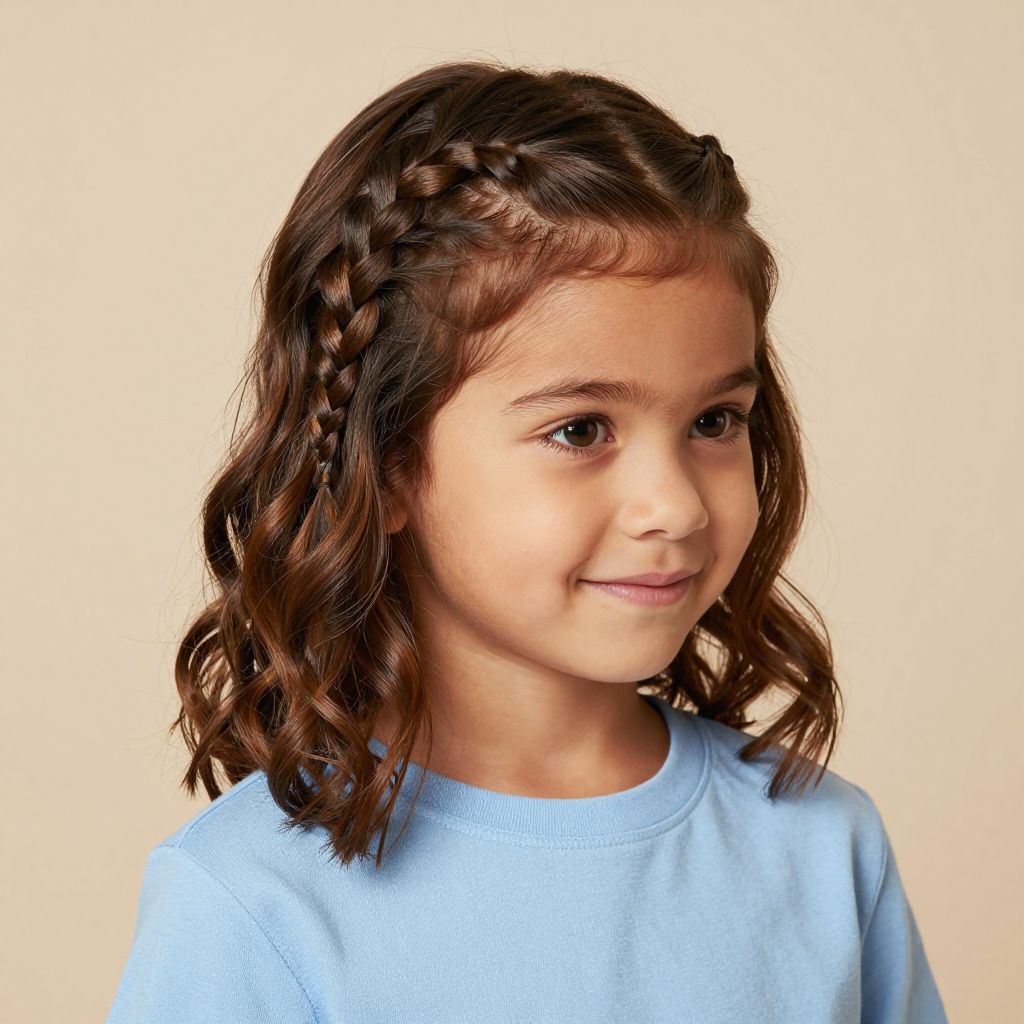
This hairstyle greets you with straightforward charm. The smooth, tight braid runs from the crown down to the nape, showcasing the hair’s natural shine and youthful bounce. It’s fuss free, and you immediately notice the neatness framing the soft face.
- Length: Medium
- Texture: Smooth to slightly wavy
- Cut Style: Even length with slight layering
- Styling Time: 5 to 10 minutes
- Maintenance Level: Low
- Best Feature: Classic neatness
Reality Check: Requires daily detangling to avoid knots and occasional recoiling after naps or play. A little patience here goes a long way.
2. Mini Cornrow Braids
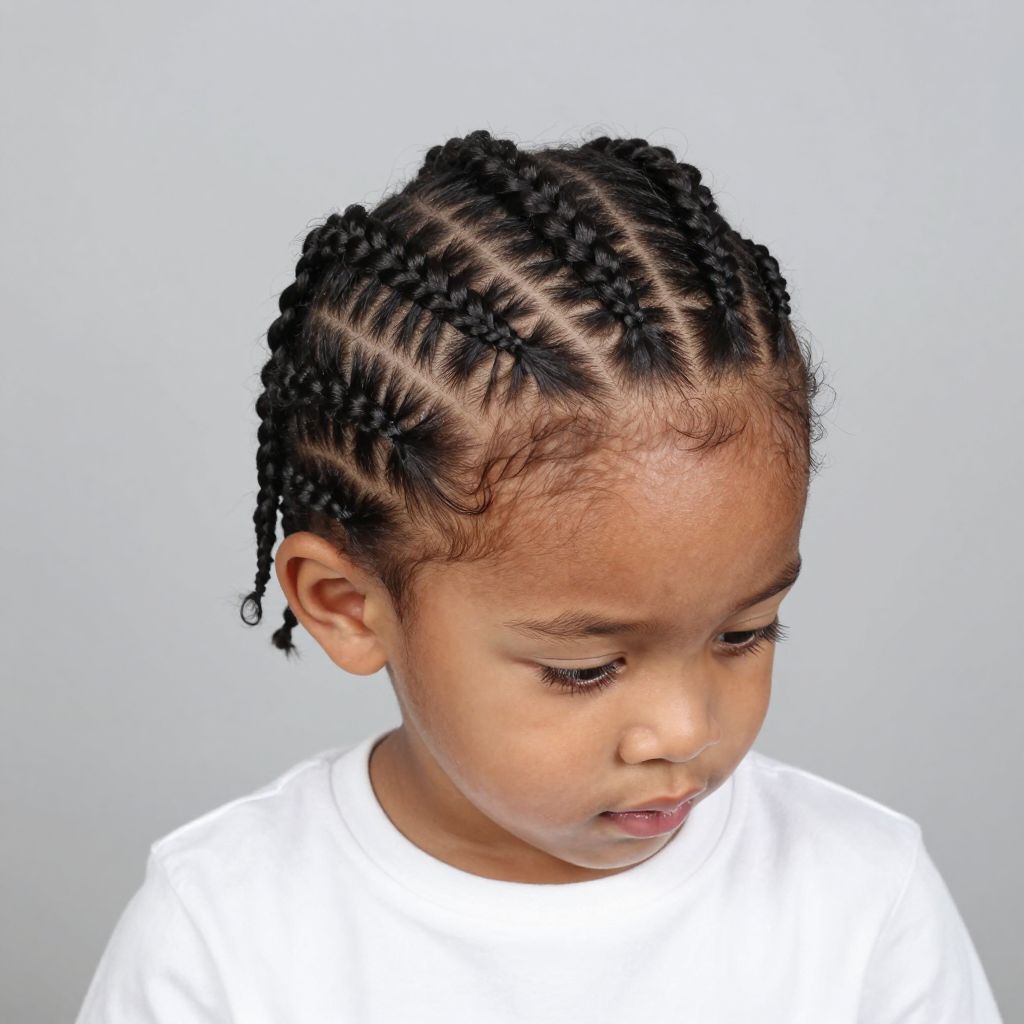
Mini cornrow braids bring an instant dose of cool. The closely braided, small sections allow glimpses of the scalp, creating geometry and structure. The look feels edgy without being overwhelming for a toddler.
- Length: Short to medium
- Texture: Coarser textures thrive but can suit all
- Cut Style: Uniform length
- Styling Time: 15 to 20 minutes
- Maintenance Level: Medium
- Best Feature: Structured pattern
Reality Check: Needs regular scalp moisturizing and upkeep every 2 weeks to avoid frizz and preserve neat braids.
3. Side Swept Single Braid
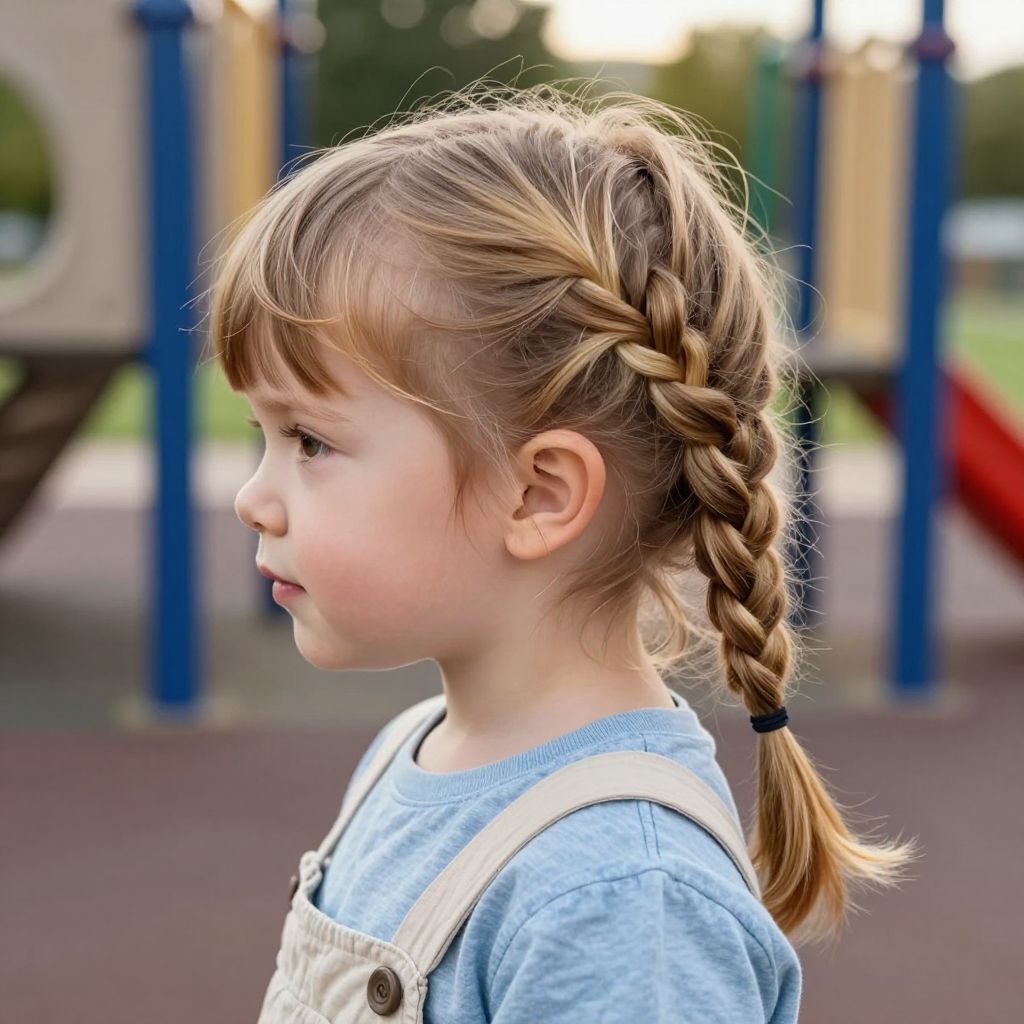
What captures you here is the asymmetrical charm as the braid trails down one side. It adds softness with a gentle curve and highlights fine textures beautifully. The side placement changes things up and offers playful movement.
- Length: Medium
- Texture: Fine to medium
- Cut Style: Soft layers
- Styling Time: 7 to 12 minutes
- Maintenance Level: Low to medium
- Best Feature: Playful asymmetry
Reality Check: Gentle braiding keeps hair from pulling but watch for slip on silky textures which may need light gripping products.
4. Double Braided Pigtails
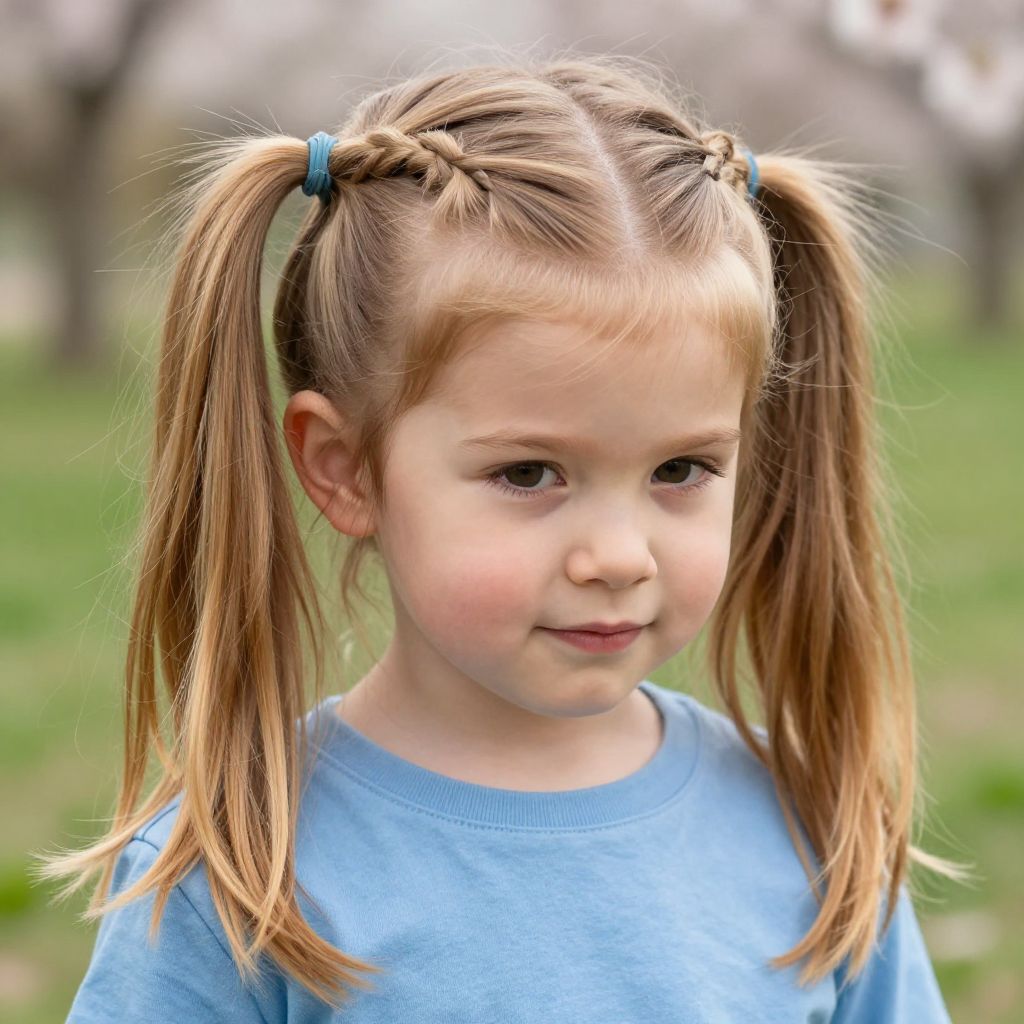
Instant sweetness is the first thing here. Two balanced braids on either side frame the face with symmetry and bounce. Volume looks full, and it invites that classic kiddo spirit with a touch of nostalgia.
- Length: Medium
- Texture: Naturally straight or wavy
- Cut Style: Blunt or gentle layers
- Styling Time: 10 minutes
- Maintenance Level: Medium
- Best Feature: Balanced innocence
Reality Check: Requires gentle detangling and occasional re braiding after naps to avoid messy knots.
5. Fishtail Braid Adventure
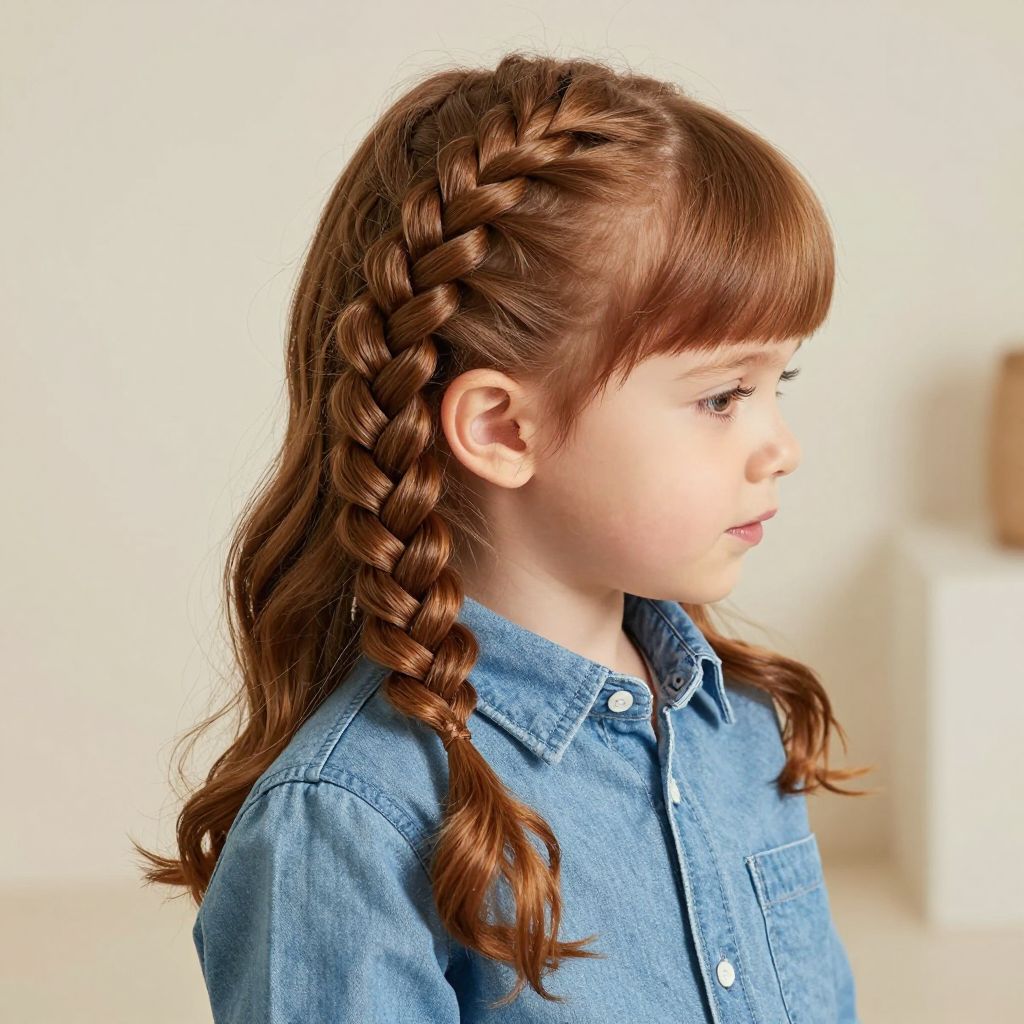
The fishtail braid intrigues with its woven complexity. The narrow, intricate interlacing pulls your eye in. It adds texture and a sense of craftsmanship, turning toddler hair into art.
- Length: Medium to long
- Texture: Slightly wavy preferred
- Cut Style: Layered for movement
- Styling Time: 12 to 18 minutes
- Maintenance Level: Medium to high
- Best Feature: Intricate craftsmanship
Reality Check: Can be tricky to maintain for very active toddlers, needs gentler handling and product for hold without crunchiness.
6. Braided Mohawk
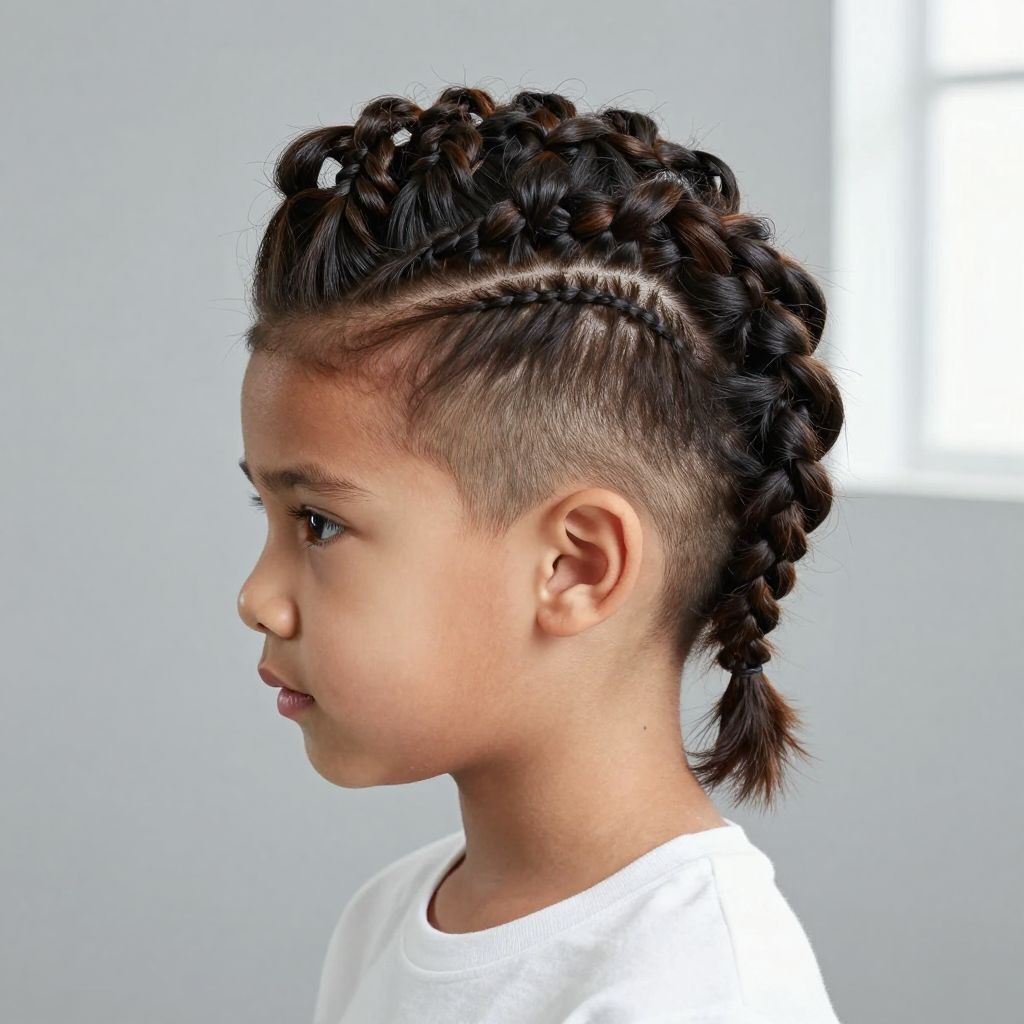
Bold and eye catching, this style runs sleek braids along the center scalp strip. The sides shaved or closely cropped highlight the braid’s volume and length, creating a striking silhouette.
- Length: Short sides, long middle
- Texture: Coarse preferred but versatile
- Cut Style: Mohawk shape with clean lines
- Styling Time: 10 to 15 minutes
- Maintenance Level: Medium
- Best Feature: Edgy silhouette
Reality Check: Maintenance involves frequent trims and scalp care, as shaved areas need attention alongside braid upkeep.
7. Half-Up Braided Crown
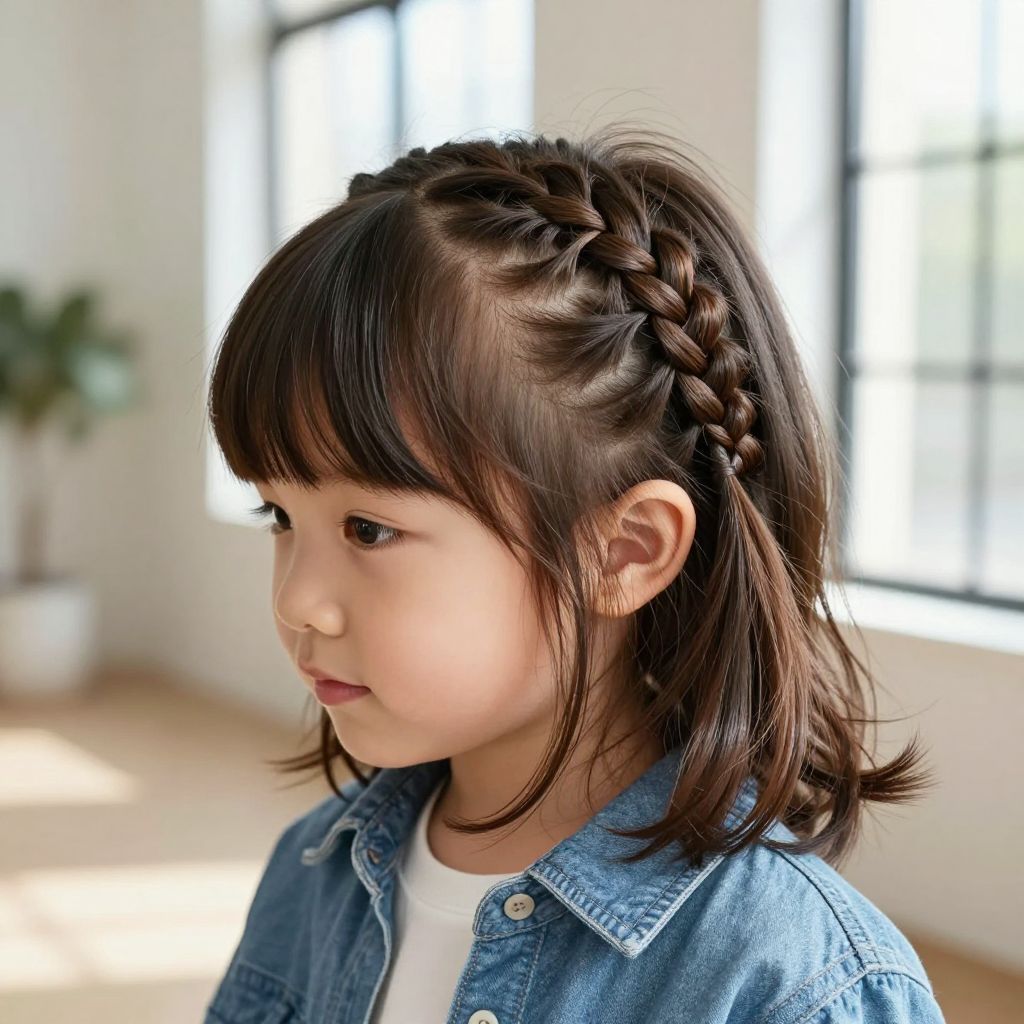
Immediately you notice the regal vibe as the top section braids around the crown. Hair flows loosely underneath, softening the structured braid. The contrast creates balanced volume and an elegant twist on toddler styling.
- Length: Medium to long
- Texture: Straight to wavy
- Cut Style: Layered and soft
- Styling Time: 12 minutes
- Maintenance Level: Low to medium
- Best Feature: Regal elegance
Reality Check: The loose hair may need gentle brushing often and the braid may loosen after play, requiring touch ups.
8. Rope Braided Ponytail
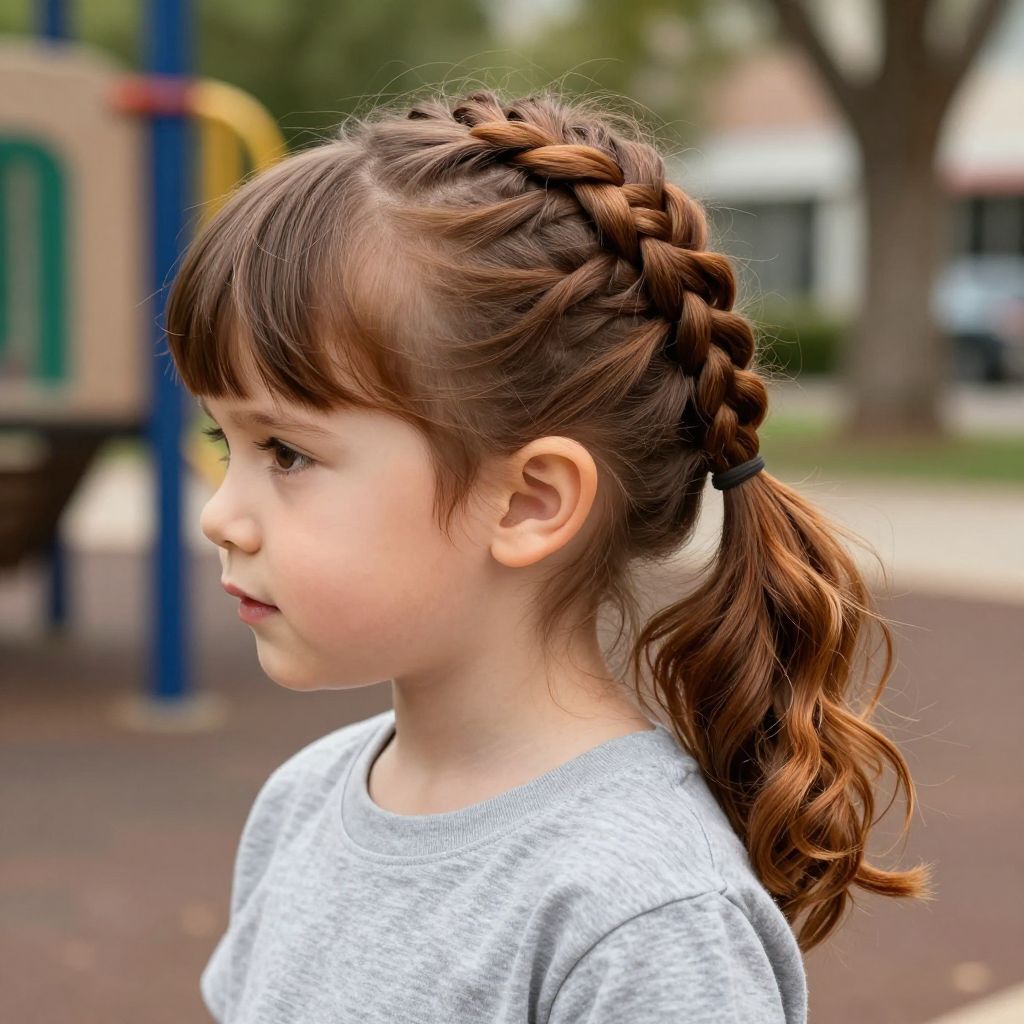
The twisted rope braid leading into a ponytail creates dynamic texture and visual interest. It adds defined shape without overwhelming curly or wavy textures. The style is both sporty and neat.
- Length: Medium
- Texture: Wavy to curly
- Cut Style: Even ends
- Styling Time: 8 to 12 minutes
- Maintenance Level: Low
- Best Feature: Dynamic texture
Reality Check: Twisting can loosen if hair is very fine or silky; light styling gel may improve hold without stickiness.
9. Zigzag Part Braids
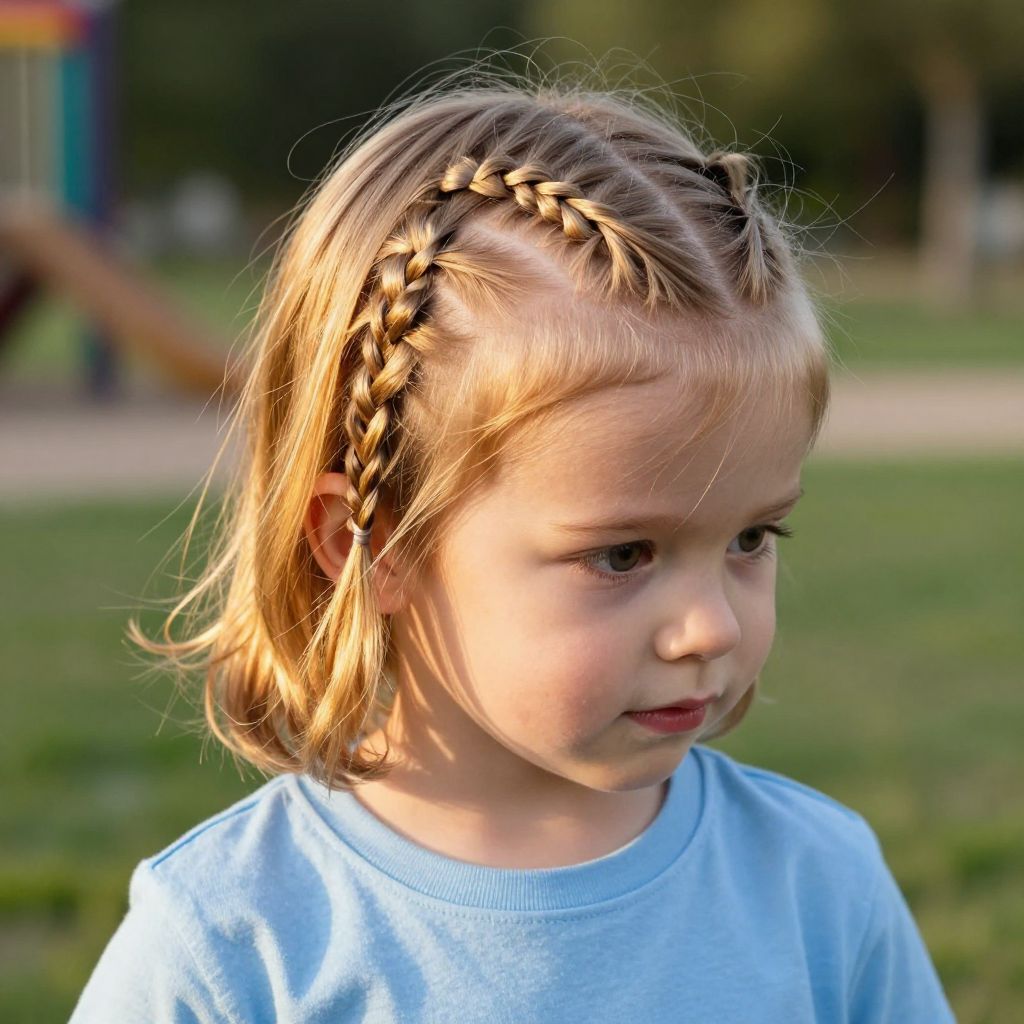
Right away, the zigzag part adds personality and fun, creating a textured base for small braids along its edges. This distinctive pattern gives classics a fresh twist and brightens the whole face.
- Length: Short to medium
- Texture: Straight to wavy
- Cut Style: Uniform length
- Styling Time: 10 to 15 minutes
- Maintenance Level: Medium
- Best Feature: Playful uniqueness
Reality Check: Keeping the zigzag crisp can be a challenge with restless toddlers; prepping with smoothing sprays helps.
10. Braided Bun with Loose Baby Hairs
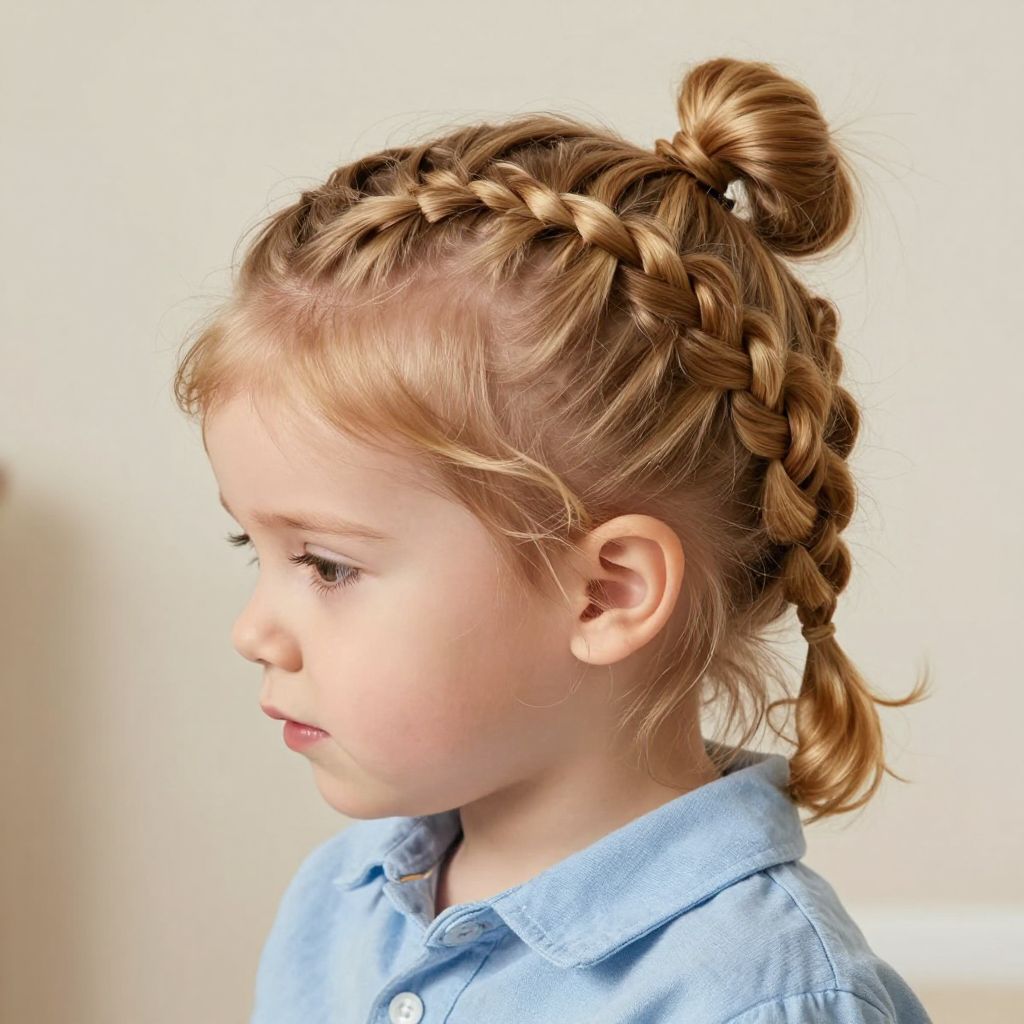
The tight braid swept into a small bun balances control and softness. The delicate baby hairs frame the face subtly, softening the look and adding natural charm.
- Length: Medium
- Texture: Fine to medium
- Cut Style: Minimal layers
- Styling Time: 12 minutes
- Maintenance Level: Medium
- Best Feature: Soft contrast
Reality Check: May require light product daily; toddler naps can loosen the bun or braid, so expect minor touch ups.
11. Spiral Braided Locks
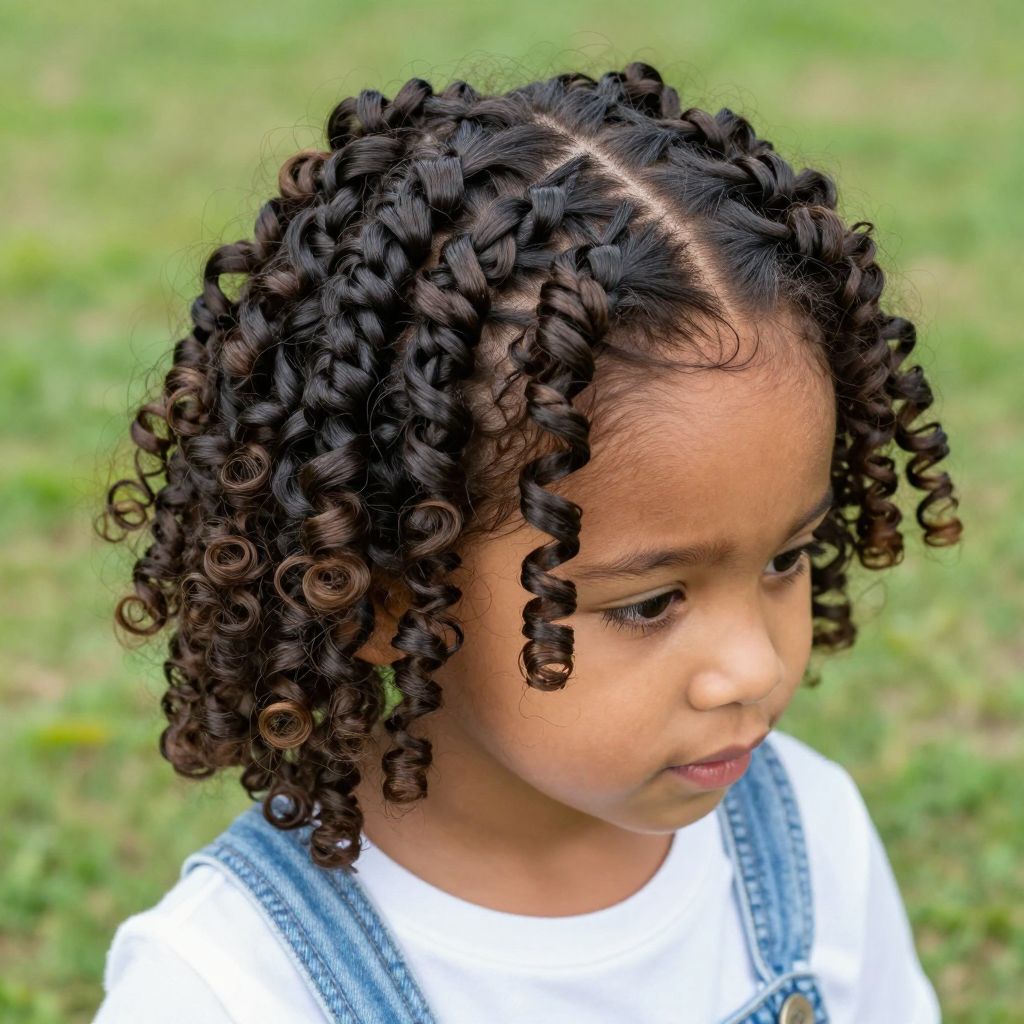
Spiral braids take the eye along a curving path, adding unique dimension and showing off natural curl pattern beautifully. The volumized look gives the hair a joyful bounce and playful energy.
- Length: Medium to long
- Texture: Curly to coily
- Cut Style: Natural length
- Styling Time: 15 to 20 minutes
- Maintenance Level: Medium
- Best Feature: Natural curl showcase
Reality Check: Requires consistent moisturizing and gentle detangling to avoid breakage and keep spirals defined.
12. Braided Fringe Fringe
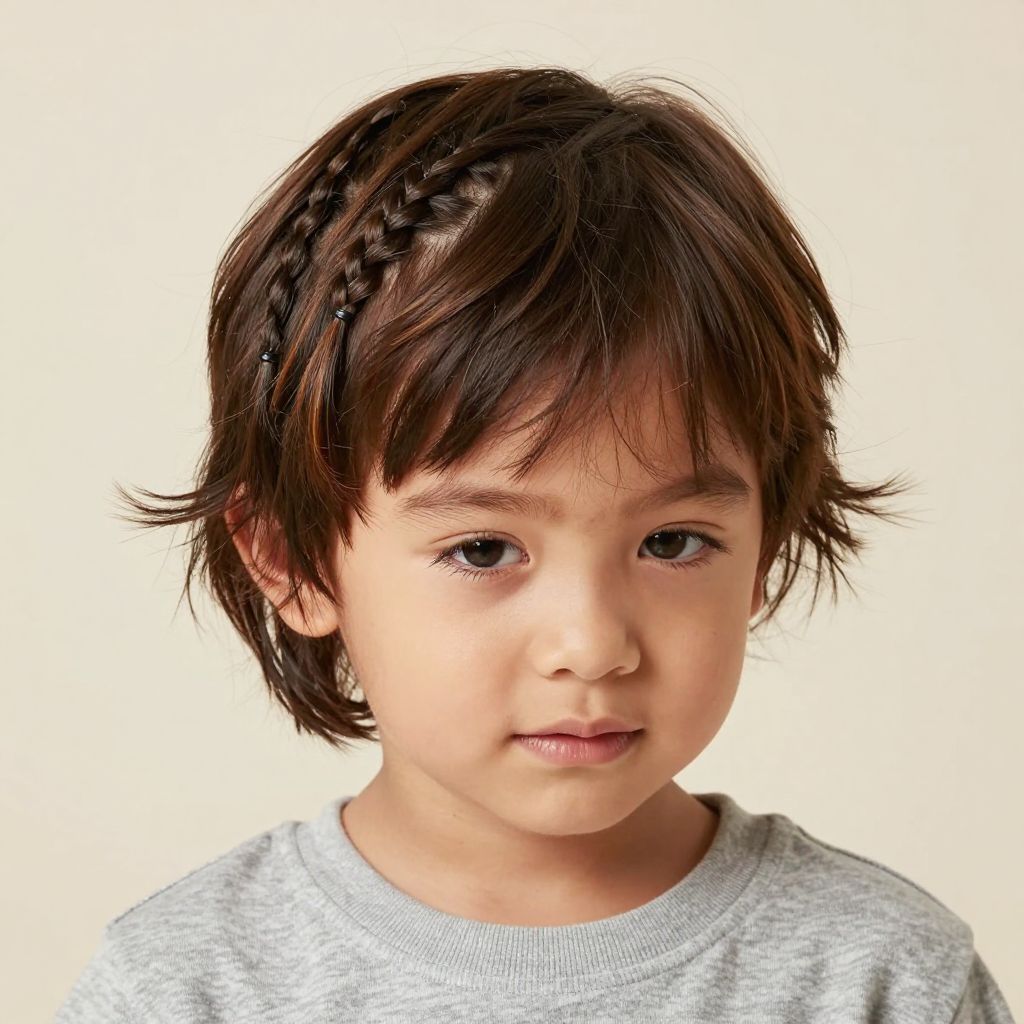
The focus is on the front hairline with delicate mini braids creating a fringe. These frame the face and add a quirky edge without the weight of full braids all over.
- Length: Short front, short overall
- Texture: Straight to fine waves
- Cut Style: Short layers
- Styling Time: 7 to 10 minutes
- Maintenance Level: Low
- Best Feature: Subtle edge
Reality Check: Ties need daily grooming, fingers in hair sometimes loosen braids, patience required for upkeep.
13. Angular Side Braids
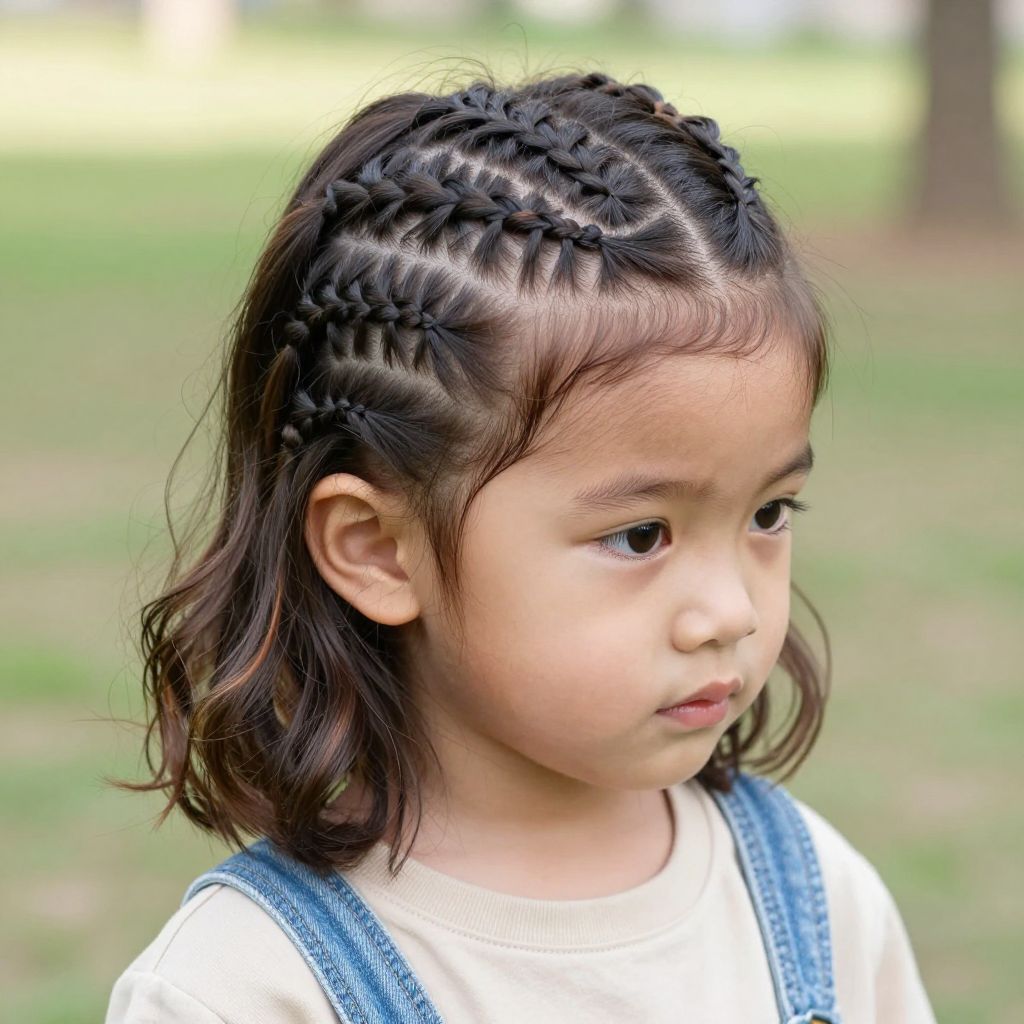
Angles and sharp lines dominate here, with braid sections that follow an upward diagonal stretch across the scalp. This creates a lively shape full of motion and break from traditional symmetry.
- Length: Medium
- Texture: Straight to wavy
- Cut Style: Defined edges
- Styling Time: 12 minutes
- Maintenance Level: Medium
- Best Feature: Dynamic shape
Reality Check: Sharp angles can blur with toddler activity; frequent styling touch ups may be necessary.
14. Dutch Braided Headband
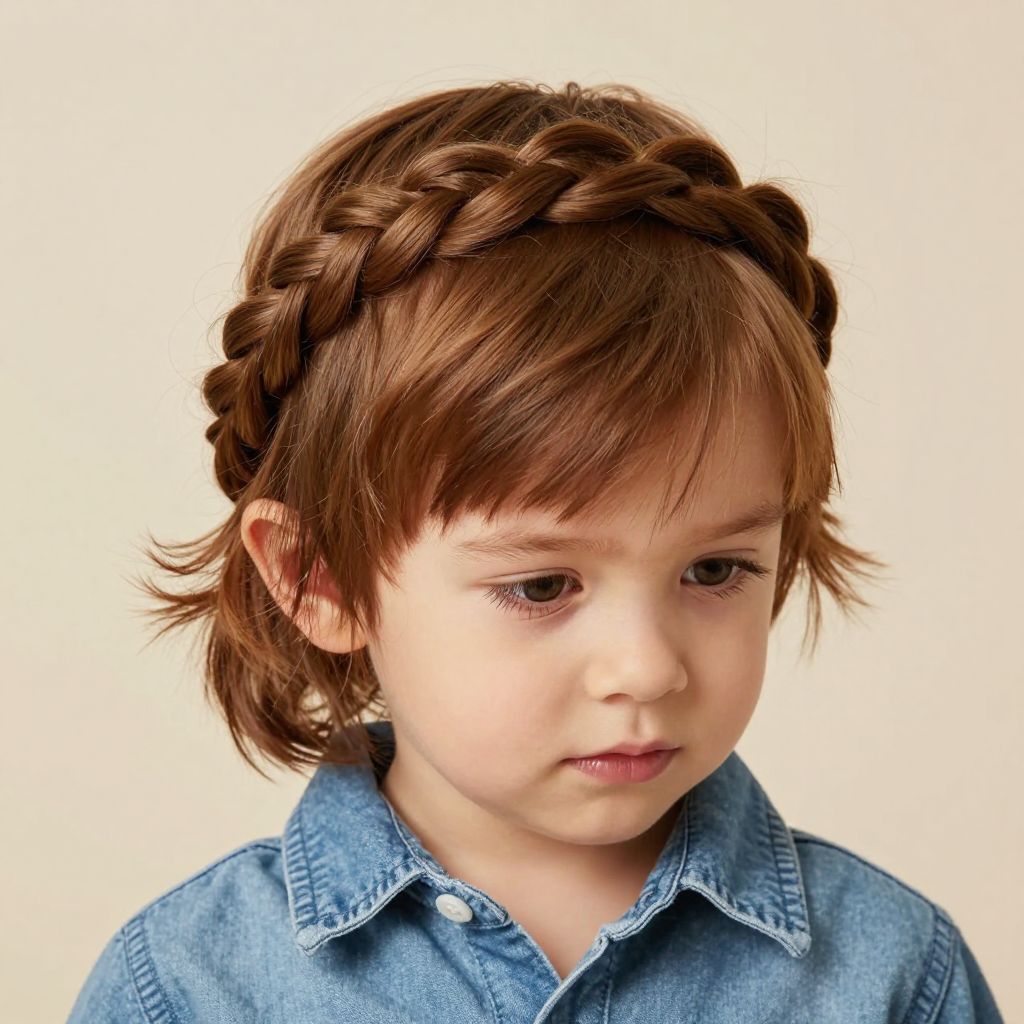
The Dutch braid rises above the forehead like a nature inspired crown. This thick, raised braid draws focus upward and defines the face with an artistry that feels youthful yet intentional.
- Length: Medium
- Texture: Straight to wavy
- Cut Style: Even length
- Styling Time: 8 to 12 minutes
- Maintenance Level: Low to medium
- Best Feature: Face framing detail
Reality Check: Hair must be kept moisturized to avoid frizz and the braid retained frequently to look fresh.
15. Half Cornrows with Loose Ends
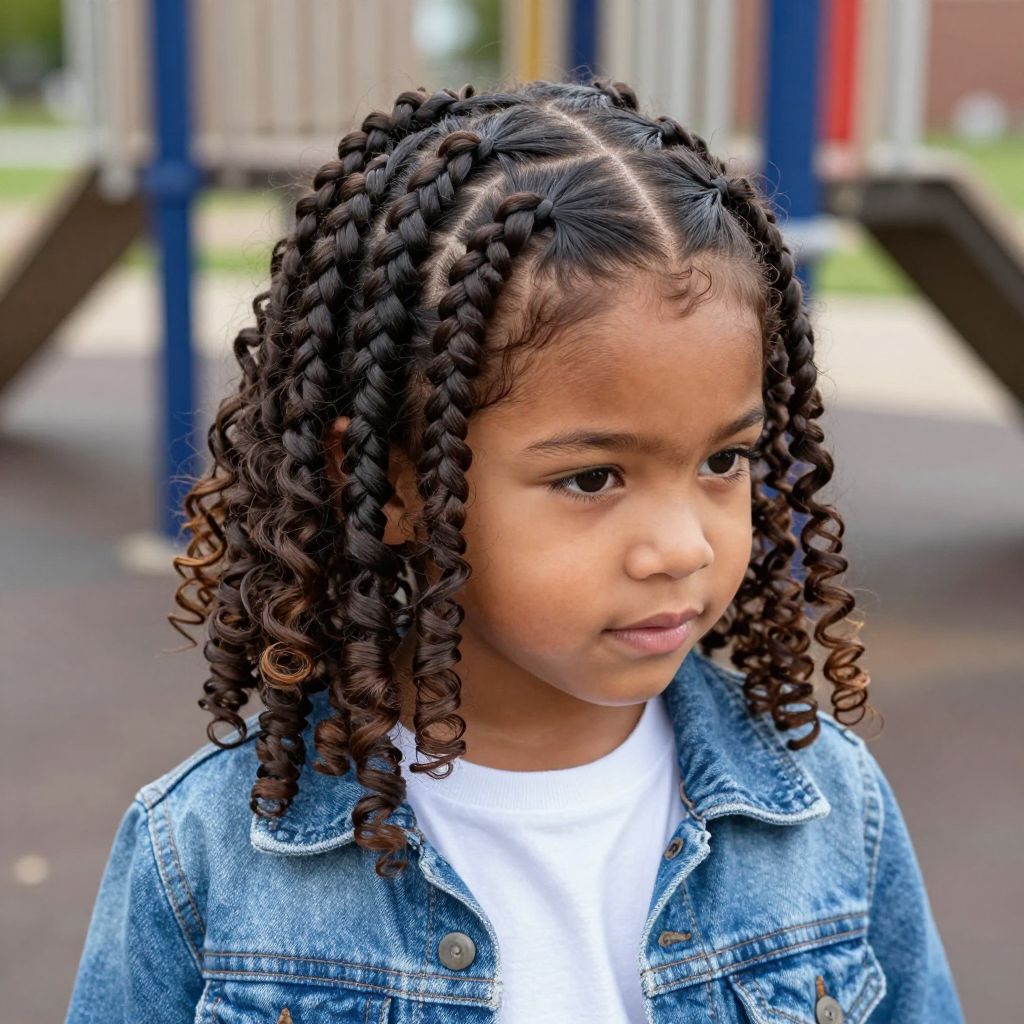
This hybrid style surprises with half neatly braided cornrows and free flowing hair ends behind. It’s a youthful balance between control and freedom, perfect for showing natural textures.
- Length: Medium
- Texture: Coily or curly preferred
- Cut Style: Natural ends
- Styling Time: 15 minutes
- Maintenance Level: Medium
- Best Feature: Contrast in texture
Reality Check: Requires neat parting and scalp care; loose ends may tangle more quickly after play.
How Different Hair Types Change The Look
Straight hair highlights precision in braid patterns but may slip out if very fine. Light texturizing products help add grip and volume to maintain style integrity.
Wavy hair adds natural volume and bounce, giving braids a more relaxed, playful vibe. This hair type embraces softer finished looks with movement.
Curly hair enriches braid styles with stunning texture contrast. Braids hold definition longer but need moisturizing products to avoid dryness and frizz.
Coily hair thrives with braids, making each style pop with volume and rich texture. Protective braiding is excellent for managing this hair type’s natural density and curl patterns.
Fine hair tends to need help holding braids due to slippery strands. Lightweight mousse or texture spray improves grip and longevity without weighing hair down.
Thick hair creates fuller braids and dramatic volume. Layering is key to avoid looking bulky, and braiding can be more time intensive but offers stunning results.
Color Pairing Ideas Worth Considering
Dimensional brunettes find depth in braid styles when subtle shades of chocolate and chestnut interplay. This makes braids pop with natural vibrance without overpowering the overall look.
Warm blondes glow under sunlight, enhancing the woven hair strands especially in open braid styles. Honey and caramel highlights add richness and warmth that suits playful toddler styles.
Copper shades bring fiery personality to braids, making toddlers stand out in a crowd. This bold color pairs beautifully with simpler braid styles, balancing energy and neatness.
Rich black tones give braids a sleek, polished finish. They glow uniquely under light, emphasizing texture and shape, especially in more structured braid patterns.
Highlights create multidimensional interest by accentuating edges and parts of braids. They refresh standard looks and add life to classic braid forms.
Balayage works wonders for toddler braids by softly blending colors and making transitions in hair color look natural. It complements loose or half braided styles beautifully.
Money piece color placements frame the face elegantly, drawing attention to the eyes and braid details close to the front. This technique adds a trendy yet subtle flair to toddler styles.
The Styling Products That Make The Biggest Difference
- Texture sprays add grip and volume to slippery hair, improving braid hold and reducing flyaways.
- Mousse enhances natural waves and curls, making braids appear fuller and easier to work with.
- Heat protectants shield delicate toddler hair during any heat styling or blow drying required for shape.
- Shine products bring a silky finish and reduce frizz, especially on straighter hair textures.
- Curl creams nourish and define curls or coils, helping braids maintain their shape and softness.
- Lightweight oils seal in moisture and add a healthy glow without weighing the hair down.
Choosing the right product depends largely on hair type and desired outcome, but all contribute to a neater, longer lasting toddler little boy braid hairstyle.
Common Mistakes People Make With toddler little boy braid hairstyles
1. Braiding Hair That Is Too Dry
Dry hair leads to breakage and brittle strands under tension. Always moisturize before braiding to keep hair healthy and pliable.
2. Skipping Scalp Care
Tight braids can irritate sensitive toddler scalps. Regularly check and soothe the scalp with gentle oils or lotions.
3. Using Too Much Product
Overloading hair with gel or mousse can create buildup, making braids look heavy and unnatural. Use sparingly for balance.
4. Braiding Too Tightly
Over tight braids cause discomfort and may harm hair follicles. Keep tension moderate to protect scalp health and toddler comfort.
5. Neglecting Regular Rebraiding
Leaving braids too long can lead to tangles and lose shape. Schedule braiding maintenance every 1 to 2 weeks depending on toddler activity.
Celebrity Inspired Variations
Many trendsetters elevate braid styles with bold color choices like platinum highlights or pastel money pieces, adding personal flair to toddler looks.
Volume plays a starring role for those who prefer jumbo braids or puffier cornrows, giving styles a statement silhouette even on shorter hair.
Partings vary widely: some prefer symmetrical center parts, others asymmetrical or creative zigzag lines to personalize the braid canvas on toddler heads.
Texture enhancements through heatless curls or twisted braids bring softness or edge, according to individual style preferences.
Length variations from cropped tight braids to longer layered strands showed how toddlers can sport different braid personalities while maintaining comfort.
Frequently Asked Questions
How often should toddler little boy braids be redone?
Every one to two weeks is ideal to maintain neatness and avoid tangles while giving the scalp time to rest between styles.
What is the best way to keep braids looking fresh throughout the day?
Use lightweight moisturizing sprays and gently slick stray hairs with mild gels if needed. Avoid rough play that can loosen braids.
Are some hair types more suited for braiding than others?
All hair types can be braided, but textures like coily or curly naturally hold braids longer, while straight or fine hair might need added grip.
How do I communicate my toddler’s hairstyle wishes to a stylist?
Describe preferred length, texture, and style intricacies like braid size or parting style, and bring photos for clarity.
Which products are safest for toddler scalp and hair?
Look for gentle, hypoallergenic moisturizing products without harsh chemicals, and use minimal styling aids to protect delicate hairs.
Can braids protect my toddler’s hair as it grows?
Yes, protective braids reduce daily manipulation and breakage, promoting healthier hair growth when properly maintained.
What are the key signs that a braid style needs to be changed or removed?
Look out for itchy scalp, tightened hair, or noticeable hair thinning. Comfort should always come first.
Wrapping It Up
Toddler little boy braid hairstyles offer an amazing playground of possibilities from simple classics to bold patterns. They balance form and function beautifully.
Don’t hesitate to try various braid types and adapt them to your child’s hair type and personality. After all, style should be joyful and comfortable.
With practice and creative flair, you’ll soon turn everyday toddler hair care into a delightful styling adventure.
If you enjoy discovering fresh hairstyle inspiration, take a look at these beauty and hair articles.
Explore some inspiring black kids braids hairstyles pictures for further ideas.
Looking for styles that involve two braids hairstyles? You might find exciting options to try out.